SECRET MEMBER TEXT
Blog
-
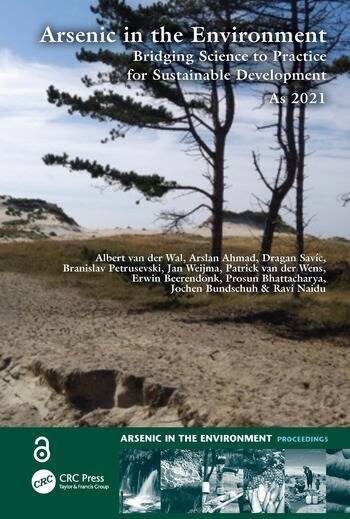
Arsenic in the Environment: Bridging Science to Practice for Sustainable Development (As2021)
The proceedings of the 8th International Congress and Exhibition on Arsenic in the Environment, held 7–9 June 2021 from Wageningen, The Netherlands, are now published by CRC Press/Balkema under the title Arsenic in the Environment: Bridging Science to Practice for Sustainable Development.
The volume is organised along the five congress themes: arsenic in natural soil and water systems; arsenic in agriculture and food production; health impacts of arsenic; technologies for arsenic removal from water; and sustainable mitigation and management for sustainable development.
-
Proud to partner with the ISGSD
The ISGSD works through partnership: with universities and research institutes, with utilities and technology providers, with UN agencies and NGOs, and with the national and thematic chapters that carry the society’s agenda into their own regions.
The original article was unreachable when the site was rebuilt. Please restore the full text and name the partner it referred to.
-
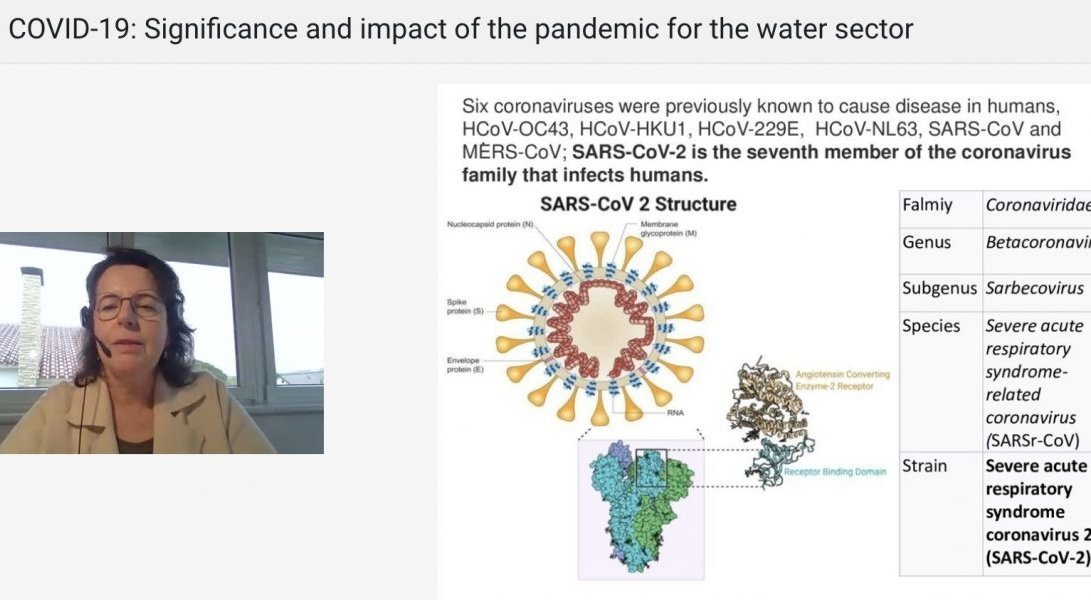
Arsenic reduction to <1 µg/L in Dutch drinking water
The Netherlands has been at the forefront of research on arsenic removal technology, developing an innovation that removes arsenic to levels below the WHO drinking water guideline — as low as less than 1 μg/L.
The significance is not only technical. Once a country demonstrates that sub-1 µg/L is achievable at utility scale, the guideline value itself becomes a policy question rather than a technical ceiling, and that is the conversation the 8th International Congress was convened to have.
The original article was unreachable when the site was rebuilt. Please restore the full text and confirm the date.
-
Donations for GSA Hydrogeology Division Student Reception
The ISGSD has contributed to the Geological Society of America Hydrogeology Division student reception — one of the few places where students working on groundwater meet the people already in the field, without a registration fee standing in the way.
Supporting student participation is one of the purposes the society raises donations for.
The original article was unreachable when the site was rebuilt. Please restore the full text and confirm the date.
-
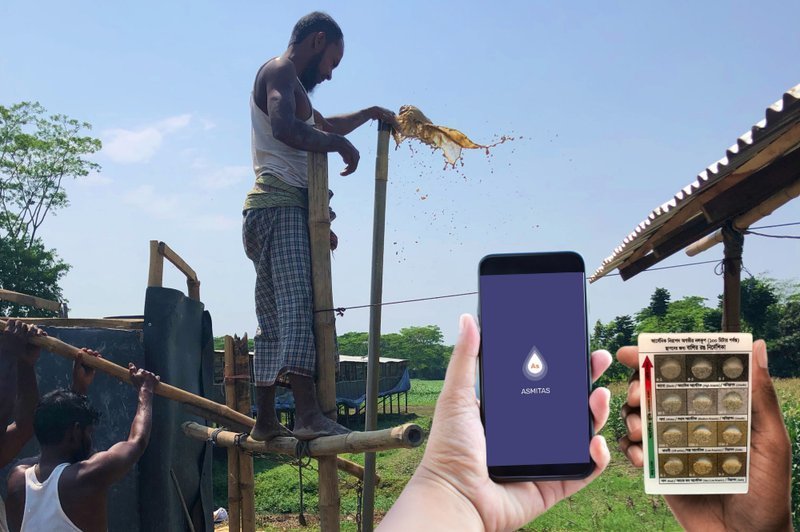
Digital water platform ASMITAS for scaling-up safe water access
ASMITAS — Arsenic Mitigation at Source — takes the Sediment Colour Tool, a visual colour attribute of sediments as perceived by local drillers, and turns it into a shared digital platform for installing community boreholes at safe depth.
The session brought together policy makers, practitioners and researchers around three threads: the present situation of safe drinking water access and the role of the private sector in realising SDG 6; the indigenous knowledge that led to the Sediment Colour Tool and its current practice; and the development of ASMITAS as a digital water platform with global applicability.
Speakers included Dara Johnston (Chief, WASH section, UNICEF Bangladesh), Prof. Prosun Bhattacharya (KTH-International Groundwater Arsenic Research Group) and Sanjeev Sharma (CEO and Co-founder, ExcelDots AB).
-
The 8th International Congress & Exhibition on Arsenic in the Environment
The eighth edition of the biennial “Arsenic in the Environment” congress and exhibition series has been announced. The series began in Mexico City (As2006) and has since been held in Valencia, Spain (As2008); Tainan, Chinese Taiwan (As2010); Cairns, Australia (As2012); Buenos Aires, Argentina (As2014); Stockholm, Sweden (As2016); and Beijing, P.R. China (As2018).
The original announcement page was unreachable when the site was rebuilt; this summary was written from the congress history recorded elsewhere on the site. Please replace it with the original text if it can be recovered.
-
Migrating arsenic in drinking water
Arsenic in groundwater is not static. It mobilises, migrates and re-deposits as redox conditions, abstraction patterns and recharge change — which is why a well that tested safe once cannot be assumed safe indefinitely, and why depth-aware siting tools such as the Sediment Colour Tool matter so much in the field.
The original article was unreachable when the site was rebuilt. This placeholder preserves the item in the news archive; please restore the full text.
-
7th International Congress & Exhibition on Arsenic in the Environment: Environmental Arsenic in a Changing World (As2018)
The 7th International Congress and Exhibition on Arsenic in the Environment was held in Beijing, P.R. China, under the theme Environmental Arsenic in a Changing World.
The original announcement was unreachable when the site was rebuilt; please restore the full text and add the programme.
-
Method will reduce arsenic poisoning in Bangladesh
Millions of tube wells in Bangladesh draw from shallow aquifers where arsenic concentrations exceed safe limits. The method that grew into the Sediment Colour Tool works with what drillers can already see: the colour of the sediment they bring up tells them, reliably enough to act on, whether the water at that depth is likely to be safe.
Because it needs no laboratory and no instrument, it can be applied at the moment a well is being sunk — which is the only moment when the decision is cheap.
The original article was unreachable when the site was rebuilt. Please restore the full text and the original source attribution.